

BEFORE YOU GO · 10 min read
Entering Thailand: the Arrival Card, the New 30-Day Rule and What Immigration Can Ask For
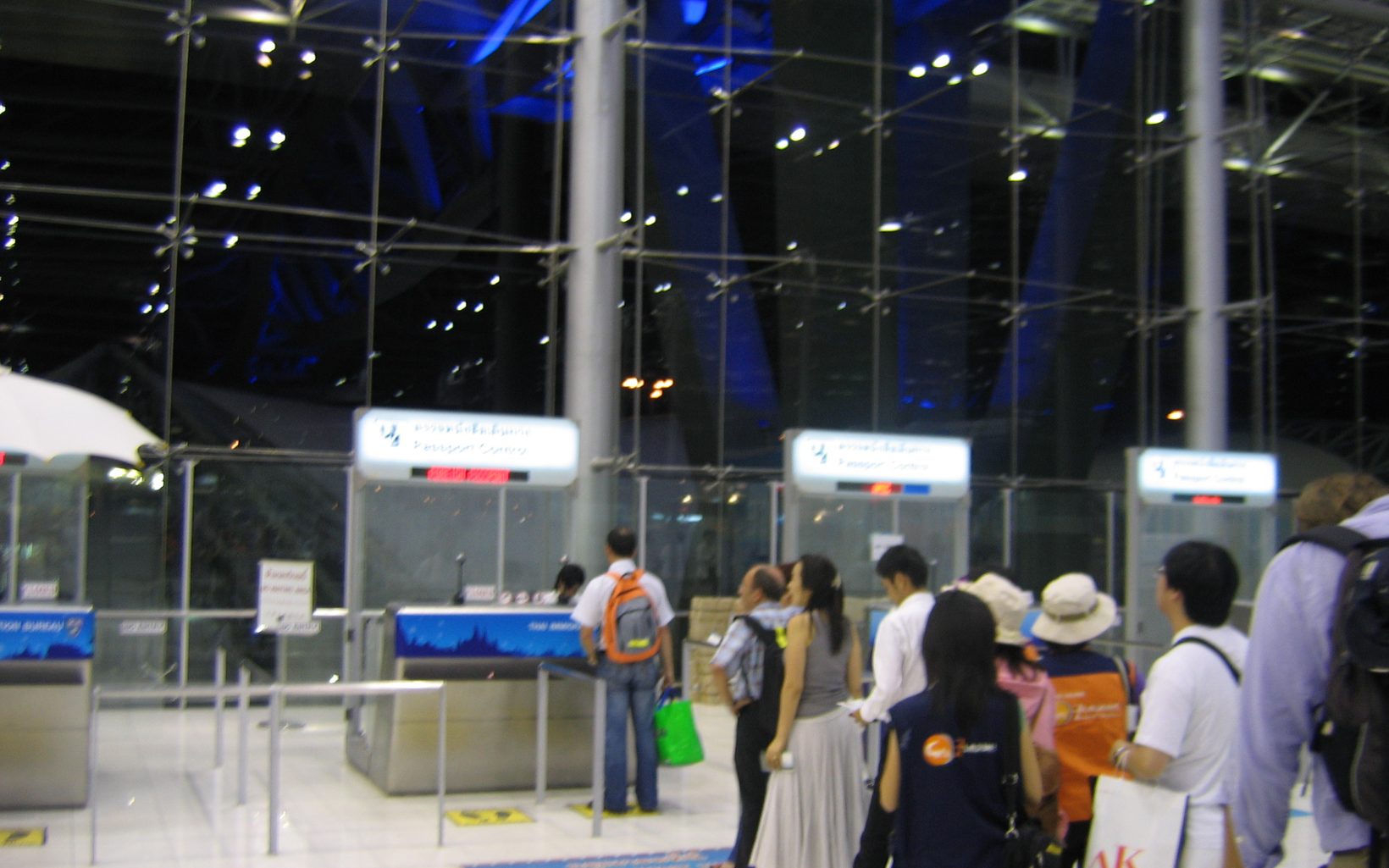
Getting into Thailand comes down to three things: the online arrival card, the right permission to enter, and the paperwork an immigration officer is entitled to ask for. All three were checked against Thai government sources on 19 September 2026, four days after the visa rules changed.
What changed on 15 September 2026
The 60-day visa exemption ended on 15 September 2026. In its place, according to the Tourism Authority of Thailand, passport holders from 60 countries and territories can now enter without a visa for tourism and stay up to 30 days. The Ministry of Interior announcements behind the change were published in the Royal Gazette on 31 August 2026, after the Cabinet approved a review of the scheme on 19 May.
At the same time the Tourism Authority announced a 15-day exemption for passport holders from Seychelles and Mauritius, and limited visa on arrival to three nationalities: Azerbaijan, Belarus and Serbia.
Which list you are on. The Foreign Ministry’s Department of Consular Affairs publishes the official lists, status as of 31 August 2026, but only as images on its summary page, so check your nationality there rather than on a copied list. An earlier draft from May 2026 listed 54 countries and has been superseded. For British travellers, the UK government’s advice now says: “From 15 September 2026, if you enter Thailand under the visa exemption scheme, you can stay for up to 30 days for tourism only.”
If you were already in Thailand. The Foreign Ministry said in May 2026 that people who entered under the old rules keep their original permitted stay until it runs out.
The arrival card (TDAC)
The Thailand Digital Arrival Card replaced the old paper TM.6 card on 1 May 2025. The Immigration Bureau’s own answers are clear on who needs one:
- Every non-Thai national, arriving by air, land or sea.
- Infants and children too. Each traveller needs their own card, though up to 10 people can go on one submission.
- Within three days before you arrive, counting the day of arrival itself.
- Not transit passengers who stay airside and never pass through immigration. Leave the airport and you need one. People entering on a Border Pass are also exempt.
It is free, and there is one official site. The Thai embassy in Canberra warns about scam websites and says the only official site is tdac.immigration.go.th, and that the card is free of charge. A site asking for a fee is therefore not the official service. The embassy in London adds that the card is not a visa and cannot be used in place of one.
Mistakes can mostly be fixed. The card can be edited after you submit it, except for your full name, passport number, nationality and date of birth. For any of those, the Immigration Bureau says to submit a new form.
If you arrive without one. When the card launched, the Tourism Authority said travellers who had not filed it and had no internet access would be helped at designated help points at immigration checkpoints. No official source we read states a fine or a refusal of entry for arriving without one, so we do not guess at one.
The THIM app does not replace it. In June 2026 the Immigration Bureau began piloting an optional app called THIM. The Tourism Authority said at the time that it is not an additional arrival-card requirement and does not replace the TDAC. We found no later official statement changing that.
Visa-free entry: 30 days, tourism only
The 30-day exemption is for tourism only, as the embassy in London puts it. A few conditions come with it.
Land borders. The Tourism Authority says the exemption can generally be used to enter through land-border checkpoints no more than twice per calendar year, with nationals of Malaysia, Brunei, Indonesia and Singapore exempt from that limit. The UK government words it more broadly: visa-exempt entry for tourism “is normally limited to two entries per calendar year”. If you plan several trips in one year, check with a Thai embassy before booking the later ones.
Onward travel and a bed. The embassy in London says visa-exempt visitors must show proof of accommodation, and of onward travel booked within 30 days of arrival.
Proof of funds. In July 2026 the Tourism Authority reminded visitors, and said it was not a new measure, that immigration officers can ask to see money:
| Arriving on | Per person | Per family |
|---|---|---|
| Visa exemption | 10,000 baht | 20,000 baht |
| Tourist visa | 20,000 baht | 40,000 baht |
It said children under 12 are not counted, and that the money can be shown in baht, the same amount in another currency, or documents showing payment. It also said the final decision rests with the officer at the checkpoint. The embassy in London’s page puts the figure for visa-exempt visitors higher, at 20,000 baht per person. The two sources disagree, and carrying the higher amount, or proof of it, satisfies both.
Passport validity. No current Thai government page we read states a rule for visa-exempt entry. The UK government says your passport must be valid for at least six months after the date you arrive and have at least one blank page. The embassy in London asks visa-on-arrival applicants for six months and two blank pages.
Staying longer
The embassy in London says visa-exempt visitors who want to stay longer can apply to the Immigration Bureau for an extension of up to 30 days. The Immigration Bureau’s fee schedule, as published by its Samut Prakan office, puts an extension of a temporary stay at 1,900 baht per application. We found no official statement on whether the new 15-day exemption can be extended.
For anything longer than a holiday, the right visa has to be arranged before you travel.
The 15-day exemption and visa on arrival
Passport holders from Seychelles and Mauritius get 15 days without a visa. Visa on arrival now applies to Azerbaijan, Belarus and Serbia only, which is how the Foreign Ministry’s summary lists it. The embassy in London’s terms for it:
- 15 days, for tourism only, at designated immigration checkpoints.
- 2,000 baht, cash only and non-refundable. The Foreign Ministry’s summary gives the same fee.
- A passport valid for six months, with two blank pages.
- No extension, except where illness prevents you from travelling.
Getting a visa
Thai embassies direct visa applicants to thaievisa.go.th, the Foreign Ministry’s official e-Visa site. The embassy in Brussels says every Thai visa application must be made there and on no other site.
The Destination Thailand Visa (DTV) is the longer option many travellers ask about. The embassy in London describes it as a five-year, multiple-entry visa for remote workers and for Thai activities such as Muay Thai, Thai cooking courses and medical treatment. Each entry allows up to 180 days, extendable once by up to 180 days. The embassy in Washington asks for bank statements covering the last three months with a balance of at least 500,000 baht. The fee is quoted in local currency by each embassy, so none is given here.
Overstaying
The fine is 500 baht a day, capped at 20,000 baht, according to the Thai embassy in Canberra, and the UK government gives the same figure. The longer the overstay, the longer you can be barred from coming back. The Thai consulate in Ho Chi Minh City sets out the bans under an order in force since 20 March 2016:
- If you surrender: an overstay of more than 90 days bars you for 1 year, more than 1 year for 3 years, more than 3 years for 5 years, and more than 5 years for 10 years.
- If you are arrested: an overstay of under a year bars you for 5 years, and more than a year for 10 years.
The bans run from the date you leave. That consulate page was last updated in November 2022. We found no newer official version.
Customs
The Customs Department’s duty-free allowances for a passenger are:
- Tobacco: no more than 200 cigarettes, or 250 grams of tobacco, or 250 grams of both combined.
- Alcohol: no more than 1 litre.
Anything over the allowance, it says, must be put in the Customs box, or the passenger will be prosecuted.
Vapes are a different matter entirely. They are not an allowance question: the UK government says possessing or using any vape, e-cigarette, pod, e-liquid or heat-not-burn device is illegal in Thailand. Our guide to the laws that catch tourists out has the penalties.
Cash. The Bank of Thailand says baht, foreign banknotes and negotiable instruments carried in or out must be declared to Customs when together they exceed 450,000 baht or USD 15,000, or the equivalent. Some older embassy pages give a different figure; the Bank of Thailand’s is the one printed here.
Where you stay: the TM30 report
Thai law requires foreigners’ places of stay to be reported to immigration, a form known as the TM30. The Immigration Bureau’s Phitsanulok office sets out the rule under Section 38 of the Immigration Act: the householder, owner or occupier of a home, or the manager of a hotel, must report a foreign guest within 24 hours of arrival. The duty sits with the host, so at a hotel it is the hotel’s job. If you stay in a private home or a rented room, it is your host’s, and it is worth asking whether it has been done.
The tourism entry fee: still a proposal
A fee for foreign visitors has been discussed for years, and it is not in force as of 19 September 2026.
- January 2023. The National Tourism Policy Committee approved a draft of 300 baht by air and 150 baht by land or sea, to go to the Cabinet on 7 February 2023 (Ministry of Tourism and Sports).
- 13 August 2026. The Tourism Promotion Fund’s board was still considering a draft announcement (Ministry of Tourism and Sports).
- 17 August 2026. The government described a new proposal: a flat 450 baht per person, however you arrive. Collection by air would start 180 days after publication in the Royal Gazette, and by land and sea about 360 days after that (Government Public Relations Department).
- 30 August 2026. The Nation reported a public hearing running from 24 August to 28 September 2026, after which the proposal returns to the committee and then to the Cabinet.
Under the current proposal, collection cannot start until it is published in the Royal Gazette, and by air only 180 days after that.
Before you fly
- Check your nationality on the Foreign Ministry’s list, and plan for 30 days rather than 60.
- File the TDAC at tdac.immigration.go.th in the three days before you land. It is free.
- Carry proof of where you are staying, an onward ticket inside 30 days, and funds of 10,000 to 20,000 baht per person or proof of them.
- Leave vapes at home, and keep to 200 cigarettes and a litre of alcohol.
- Count your days. Overstaying costs 500 baht a day.
What we checked, 19 September 2026
Every rule, fee and figure here comes from a Thai government body: the Immigration Bureau's TDAC site and two of its regional offices, the Ministry of Foreign Affairs and its embassies in London, Canberra, Brussels and Washington, the Tourism Authority of Thailand, the Customs Department, the Bank of Thailand, the Ministry of Tourism and Sports and the Government Public Relations Department. UK government advice is quoted where it is the clearest current statement, and labelled as such. Each source was re-opened by a second reader who confirmed the figure on the page. The Immigration Bureau's national website returned an error on every attempt, so its own pages could not be read, and the Royal Gazette text of the 31 August 2026 visa announcements was not found; the dates and scope come from the Tourism Authority and the Foreign Ministry. Where two official sources disagree, as they do on proof of funds, both figures are given. The country lists are published only as images on the Foreign Ministry's site, so they are linked rather than copied.
Sources
- TDAC frequently asked questions, Immigration Bureau, Royal Thai Police
- Thailand Digital Arrival Card system set to launch on 1 May 2025, Tourism Authority of Thailand
- Beware of Thailand Digital Arrival Card scam websites, 24 November 2025, Royal Thai Embassy, Canberra
- Thailand Immigration Management application introduced, 11 June 2026, Tourism Authority of Thailand
- New 30-day and 15-day visa exemption rules from 15 September, 1 September 2026, Tourism Authority of Thailand
- Visa exemption and visa on arrival: summary and country lists, status as of 31 August 2026, Department of Consular Affairs, Ministry of Foreign Affairs
- Cabinet approves review of visa exemption measures, 20 May 2026, Department of Consular Affairs, Ministry of Foreign Affairs
- Visa exemption, visa on arrival and TDAC, Royal Thai Embassy, London
- Reminder on proof of funds for foreign visitors, 6 July 2026, Tourism Authority of Thailand
- Immigration fees, Samut Prakan Immigration, Immigration Bureau
- Visa information, Royal Thai Embassy, Brussels
- Thai e-Visa, official website, Ministry of Foreign Affairs
- Destination Thailand Visa, updated 8 September 2026, Royal Thai Embassy, London
- DTV visa, updated 10 September 2026, Royal Thai Embassy, Washington DC
- Overstay regulations, Royal Thai Embassy, Canberra
- Thailand overstay measures, Royal Thai Consulate-General, Ho Chi Minh City
- Duty-free allowances for passengers, Customs Department
- Foreign exchange laws: carrying currency in and out, Bank of Thailand
- Reporting a foreigner's place of stay (TM30), 24 December 2024, Phitsanulok Immigration, Immigration Bureau
- Tourism entry fee approved in draft, 27 January 2023, Ministry of Tourism and Sports
- Tourism Promotion Fund board considers the draft fee, 13 August 2026, Ministry of Tourism and Sports
- Thailand proposes new THB450 tourism fee, 17 August 2026, Government Public Relations Department
- Public hearing on the tourism fee (news report), 30 August 2026, The Nation
- Thailand entry requirements, UK Foreign, Commonwealth and Development Office