

BEFORE YOU GO · 9 min
Thai SIM Cards and eSIMs: What the Networks Charge, and the Registration Rules
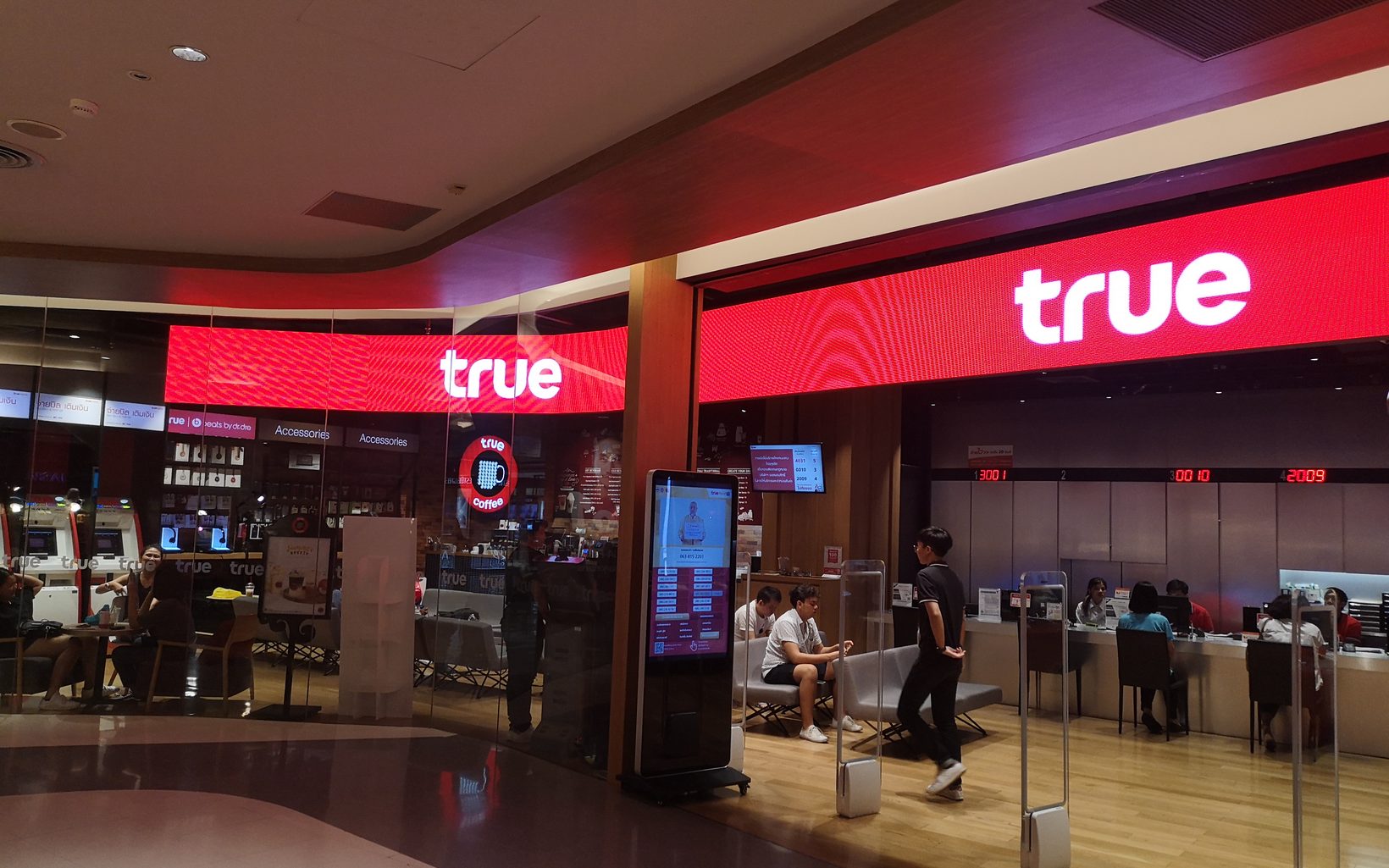
Thailand does not sell anonymous SIM cards. Registration has been the rule for years, and since 18 August 2025 a nationwide identity check has applied to every new prepaid and postpaid number, with a visitor registering an original passport in person. That single rule shapes everything else: where you can buy, what you must carry, and why a SIM bought online still has to be collected and registered somewhere.
The prices below are the ones the networks displayed on 20 September 2026.
Register it, with your passport, in person
The Government Public Relations Department set out that check when it opened. It covers new users on both prepaid and monthly plans, and existing users who change SIM but keep their number. A Thai national registers with an original national ID card. A foreigner registers with an original passport. The check uses liveness detection, which the department describes as technology to confirm a real person rather than a photograph, a video or a three-dimensional mask.
Two consequences follow for a visitor:
- Take the passport itself. The rule names the original document, not a photograph or a photocopy, and the liveness check is done on the person standing there.
- Buy it yourself. A SIM registered in someone else’s name is the arrangement the fraud laws are aimed at, and the penalties are heavy. See the last section.
How many you may hold. True’s tourist SIM terms state the limit as “no more than three SIMs per person per brand”, which it attributes to the regulator’s rules. Nothing on the networks’ pages suggests a normal visitor is near that.
Sixty days is the number to remember. AIS’s tourist plan page says a foreign visitor who wants to keep using a tourist SIM beyond 60 days from activation must confirm their identity again, either by sending the passport number by SMS to 4444161 free of charge and following the link that comes back, or at any AIS shop. The same page says a number must be activated within 60 days of being registered, or identity verification starts again.
What the two networks sell
Thailand has three mobile networks. AIS and True both sell a tourist package; dtac is True’s second brand and sells the Happy Tourist SIM through the same company. National Telecom’s own site lists broadband, fixed line, mobile and set-top-box services, with no tourist product among them.
AIS, the Lucky Tourist SIM. Its own page gives:
| Validity | Price | Data |
|---|---|---|
| 1 day | 49 baht | 1 GB at 10 Mbps, with calls to any network at 1.07 baht a minute |
| 5 days | 399 baht | Unlimited, at maximum speed |
| 8 days | 499 baht | Unlimited, at maximum speed |
| 15 days | 699 baht | Unlimited, at maximum speed |
| 30 days | 1,199 baht | Unlimited, at maximum speed |
| 60 days | 1,599 baht | Unlimited, at maximum speed |
Every tier above one day also carries free calls within the AIS network, 100 baht of bonus credit for calls to other Thai networks and for international calls dialled through the 00300 prefix, unlimited AIS Super WiFi, free calls to its 1175 call centre, and a set of social apps that do not count against data.
True, the Thailand Tourist Infinite SIM. Its own page gives 8 days at 499 baht, 15 days at 699 baht and 30 days at 1,199 baht, all with VAT included. Each carries unlimited 5G internet at maximum speed, unlimited Wi-Fi, unlimited calls to any Thai network, and 100 baht of credit for international calls. A plainer Thailand Tourist SIM at 349 baht for 10 days carries the internet and Wi-Fi without the call allowance.
The two match where it matters. At 8, 15 and 30 days the headline prices are identical, so the choice comes down to coverage where you are going and which counter you reach first.
What “unlimited” means. On the packages above, both networks promise maximum speed: AIS states “Unlimited Data, Max Speed” and True’s terms give the Infinite SIM as unlimited internet “at maximum available speed”. The qualifier sits on the cheaper product: True’s terms put its standard Tourist SIM’s data under a Fair Usage Policy, without publishing the speed it drops to or the point at which that happens. Nothing can be verified from outside, so treat any unlimited claim as a headline rather than a guarantee.
eSIM, if your phone takes one
Both networks sell the same packages as an eSIM. AIS’s traveller page opens at 399 baht, which matches its 5-day tier, and every tier on its tourist plan page carries a “Buy eSIM” link beside the shop finder. True’s tourist page offers each package as either an eSIM or a physical SIM card.
An eSIM removes the queue, not the rule: registration against a passport still applies, and the identity step happens in the app or at the shop rather than at a counter. If it matters to your arrival day, buy the physical SIM at the airport and have someone else do the paperwork.
Where to buy one
- Airport counters. dtac lists its Happy Tourist SIM counters at Suvarnabhumi, second floor of the arrival terminal at gate 7; Don Mueang, the arrival floor between terminals 1 and 2; Phuket, terminal 2 opposite the arrival gate; and Samui, the departure terminal at gates 6 and 7. True says its tourist SIMs are sold at True and dtac service centres nationwide and around the clock at airport locations. Neither publishes counter opening hours.
- Convenience stores. dtac’s page says the Happy Tourist SIM is sold at convenience stores, all branches. The registration still has to happen, so expect the passport to come out at the till.
- Online, collected at the airport. dtac sells the SIM online for collection at Suvarnabhumi within 24 hours of ordering.
- In town. Both networks run their own shops in the malls, which is where the identity checks and any awkward case get sorted out. Our airports guide covers getting from the counter into the city.
Keeping it alive
Topping up. AIS lists add-on data on the same page: 3 GB for 39 baht, 5 GB for 59, 10 GB for 90 and 20 GB for 150, each lasting 8 days and each bought by dialling a code (*777*7102# for the 3 GB, for instance). Its app and shops take top-ups, as do online channels. True and dtac publish their own self-service codes, including a dtac code that extends SIM validity by a chosen number of days.
Checking what is left. On AIS: *121# for the balance, *121*3# for remaining data and *545# to be told your own number, which is worth doing on day one.
When the validity runs out. True’s terms are blunt about this: once validity has fully expired, topping up will not revive the number, and you have to re-identify with a passport at a True or dtac shop. For a two-week trip that never comes up. For a longer stay, buy the longer package rather than assume you can extend at the last minute.
The fine print worth reading
- Handsets only. True’s tourist terms restrict the SIM to mobile handsets and prohibit use in routers, SIM boxes and other fixed devices. A travel router with a Thai SIM in it is outside what that package allows.
- Call credit is separate from data. The 100 baht bonus is credit for calls, not an allowance for data, and international calls at the cheaper rate go through the 00300 prefix on AIS, which publishes a per-country table starting at 1 baht a minute.
- Registration chases you. AIS’s own help pages ask customers who receive a notification to complete SIM registration or risk suspension, and a news report of 24 August 2026 said the network had set 31 August 2026 as a deadline for customers to update their registration details. That date has passed; if a number stops working, the fix is the shop and the passport.
Numbers that work when the SIM does not
True’s terms list what stays reachable even when outgoing calls and messages are blocked pending re-identification: its own call centres on 1242 and 1678, and the numbers 191, 1669 and 112, which it calls emergency numbers without saying what each is for. The Government Public Relations Department names 191 as the police emergency line and 1669 as the medical one, and the Tourist Police Bureau publishes 1155 as its own hotline. None of those pages says whether the numbers work with no credit at all, so we do not claim it.
Call centres: AIS on 1175, True on 1242, dtac on 1678. True notes its call centre numbers cost 3 baht a call from its own networks.
Why the rules are this tight
The registration regime exists because of call-centre fraud run on SIM cards registered to other people. The Government Public Relations Department records that the amendment to the Royal Decree on measures for the prevention and suppression of technology crime took effect on 13 April 2025. A news report of 5 March 2026 describes the penalty for opening a mule SIM as up to three years in prison, a fine of up to 300,000 baht, or both.
The practical version for a visitor: register the SIM in your own name, do not buy one that someone offers you pre-registered, and do not let anyone register a number against your passport that you will not be carrying.
What we could not confirm
- The regulator’s own text. nbtc.go.th and its subdomains sit behind a bot check that we did not attempt to get around, so every rule above is quoted from the operator or the government department that published it, not from the announcement itself.
- Coverage. Both networks publish coverage maps built with scripts that could not be read, and the figures circulating elsewhere are two years old, so no coverage or 5G claim appears here. Assume the cities and the main islands are well served and the national parks are not.
- Counter hours. No operator publishes opening hours for its airport counters, though True describes airport sales as around the clock.
- dtac’s own price list. Its product page would not render its prices on the day, so the dtac figures are not printed here. Its counters and its terms are.
What we checked, 20 September 2026
Prices, validity periods and the sales channels come from the networks' own pages, read on 20 September 2026: AIS's tourist plan page, True's tourist SIM page and dtac's where-to-buy page. Those pages build their price tables with scripts, so they were read in a browser rather than fetched, and the figures here are what the pages displayed on the day. The registration requirement and the documents it takes come from the Government Public Relations Department; the rules on SIM limits, re-identification and what still works when a number is restricted come from the operators' own terms, which cite the regulator. The regulator's own site, nbtc.go.th, sits behind a bot check that was not bypassed, so no NBTC page is quoted directly and every rule below is attributed to whoever published it. Mule SIM penalties come from a news report, labelled as such. No coverage or speed claim is repeated here: the operators publish those only on script-built maps that could not be read, and the figures found elsewhere were two years old.
Sources
- SIM and plans for tourists, AIS
- Tourist eSIM, AIS
- Update your SIM registration, AIS
- Thailand tourist SIM and eSIM, True Corporation
- Tourist Infinite SIM: terms and conditions, True Corporation
- Prepaid self-service codes, True Corporation
- Where to buy the Happy Tourist SIM, dtac
- Nationwide SIM registration from 18 August 2025, Government Public Relations Department
- Technology crime decree amendment in force from 13 April 2025, Government Public Relations Department
- Emergency and tourist assistance numbers, Government Public Relations Department
- Tourist Police hotline, Tourist Police Bureau, Royal Thai Police
- Penalties for mule SIM cards (news report), 5 March 2026, The Nation
- AIS asks customers to update SIM registration by 31 August 2026 (news report), 24 August 2026, InfoQuest
- Company services, National Telecom