

PLANNING · 9 min read
When to Go to Thailand: the Seasons Coast by Coast, From the Weather Office's Own Figures
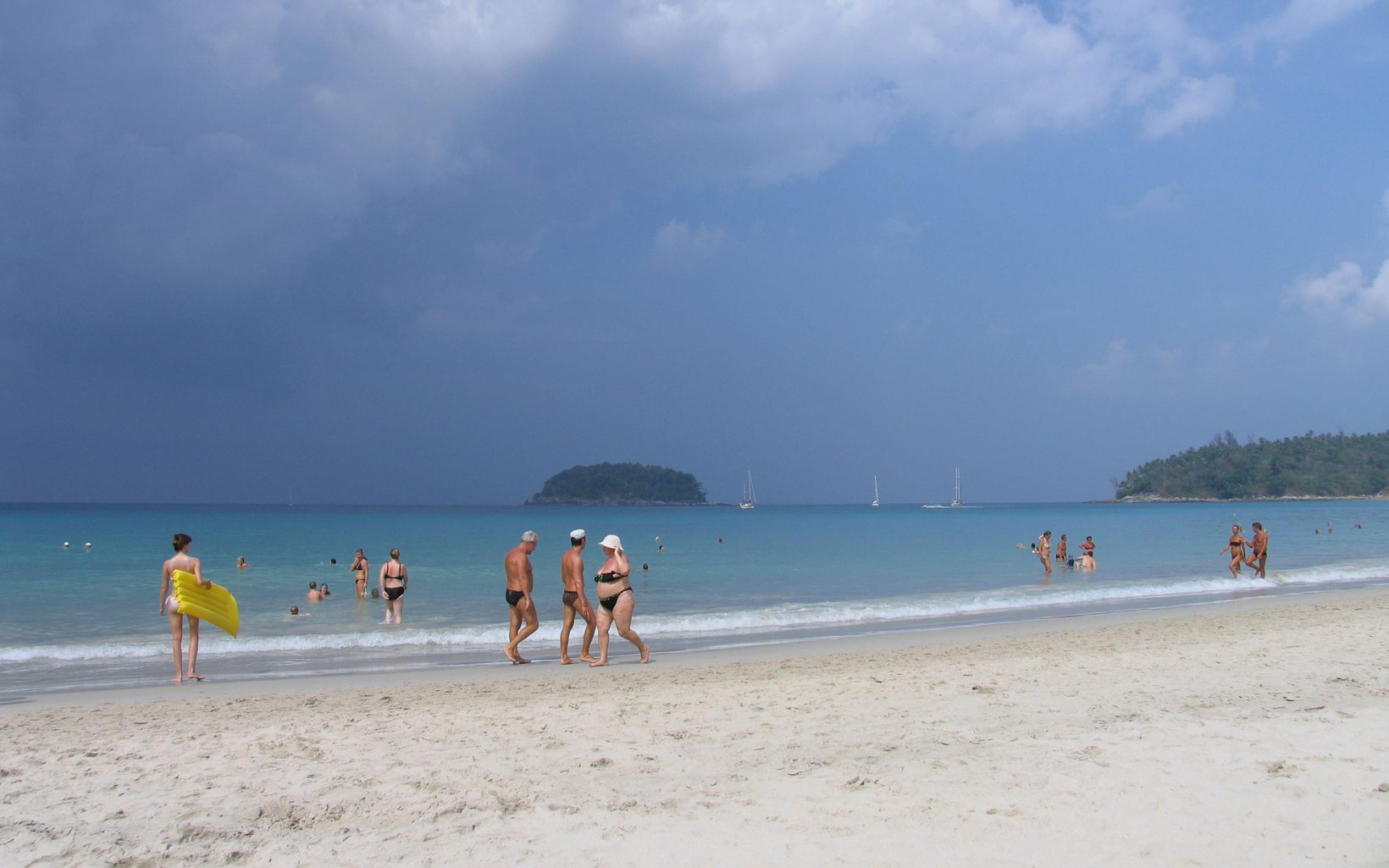
Asking when to visit Thailand is really asking which part of it. The Andaman coast and the Gulf islands get their heaviest rain months apart, the north has a smoke season the beaches do not, and several marine parks close outright for part of the year. Everything below comes from the Thai Meteorological Department (TMD), the Department of National Parks and other Thai government sources, checked on 19 September 2026.
The short answer
| Region | Covers | Drier months | Wettest month | Also watch |
|---|---|---|---|---|
| Andaman coast | Phuket, Krabi, Koh Phi Phi, Koh Lanta | December to March | September, 429 mm | Some marine parks close between May and October |
| Gulf islands | Koh Samui, Koh Phangan, Koh Tao | February to April | November, 361 mm | Ang Thong marine park shut 1 November to 15 December 2026 |
| East | Pattaya | November to February | September, 352 mm | |
| Bangkok | November to March | September, 326 mm | PM2.5 haze from late in the year into the next | |
| North | Chiang Mai | November to March | August, 238 mm | Smoke haze, roughly November to April |
The months are read from TMD’s 1991 to 2020 averages, set out in full further down. Hua Hin does not fit neatly into any row, and has its own section.
Three seasons, officially
TMD divides the year into three seasons:
- Hot: mid-February to mid-May.
- Rainy: mid-May to mid-October.
- Cool: mid-October to mid-February.
It adds that the rains can start a week or two early or late, and each year it declares the actual dates. The 2025 to 2026 cool season began on 23 October 2025, the hot season on 22 February 2026, and the rainy season on 15 May 2026. When it declared the rains, TMD said upper Thailand’s would last to about mid-October, and the south’s east coast would keep raining until December. The 2026 to 2027 cool season had not been declared when we checked.
TMD calls April the hottest month of the year, especially in upper Thailand, and September the month with the heaviest rainfall for most of the country. The Tourism Authority describes November to February as the cooler months, with temperatures of 18 to 28°C.
Two monsoons, two coasts
This is the part that catches people out. Thailand’s rain comes from two monsoons blowing from opposite directions, and each soaks a different coast.
The south-west monsoon, mid-May to mid-October, blows in from the Indian Ocean. TMD says it brings more rain to coasts and windward mountain slopes than anywhere else. The coast facing it is the Andaman, which TMD’s climate regions call the southern west coast: Ranong, Phang Nga, Phuket, Krabi, Trang and Satun.
The north-east monsoon, mid-October to mid-February, brings cold, dry air to the north and north-east. On its way south it picks up moisture from the Gulf of Thailand, so TMD says it brings heavy rain to the south’s east coast, which can see floods. That is TMD’s southern east coast region: ten provinces including Prachuap Khiri Khan and Surat Thani, down to Narathiwat.
So when Phuket is at its wettest, in September, Koh Samui is having a moderate month, and by the time Samui’s rains peak in November, the Andaman side’s are falling away.
Rain month by month
TMD’s normal rainfall for each region, in millimetres, averaged over 1991 to 2020:
| Month | Andaman coast | Gulf coast (south) | Bangkok | East (incl. Pattaya) | North (incl. Chiang Mai) |
|---|---|---|---|---|---|
| January | 50.2 | 112.0 | 21.8 | 22.9 | 10.6 |
| February | 30.2 | 44.2 | 17.7 | 28.4 | 9.8 |
| March | 103.6 | 89.8 | 48.6 | 66.5 | 32.4 |
| April | 162.2 | 85.9 | 95.0 | 102.0 | 70.5 |
| May | 300.6 | 132.6 | 207.1 | 205.3 | 173.3 |
| June | 335.5 | 118.7 | 195.8 | 259.1 | 153.3 |
| July | 349.4 | 119.6 | 183.4 | 289.0 | 189.6 |
| August | 419.2 | 130.6 | 211.7 | 285.6 | 237.8 |
| September | 429.2 | 147.0 | 325.8 | 351.7 | 222.0 |
| October | 368.8 | 253.6 | 244.2 | 218.6 | 117.0 |
| November | 193.1 | 361.4 | 43.5 | 48.2 | 26.9 |
| December | 91.5 | 296.0 | 12.1 | 9.8 | 10.6 |
Read these as regions, not towns. Each column averages several provinces. The Gulf coast column covers ten provinces, from Prachuap Khiri Khan down to Narathiwat on the Malaysian border, and the east column covers eight, including Chon Buri, where Pattaya is. TMD’s figures for individual weather stations could not be read, so no town-level number is given here.
Coast by coast
The Andaman coast: Phuket, Krabi, Koh Phi Phi, Koh Lanta
The driest stretch is January and February, with December and March not far behind. Rain climbs through April, passes 300 mm in May, and peaks in September. When it declared the 2026 rains, TMD warned of waves of 2 to 3 metres in the Andaman Sea, and more than 3 metres in thunderstorms, and advised small boats to stay ashore on those days. Several ferries on this coast run only part of the year, which our island ferry guide covers operator by operator.
Marine parks close in the wet months. The Department of National Parks’ 2026 closure announcement sets these dates for the Andaman parks:
| Park | What closes | 2026 dates |
|---|---|---|
| Mu Ko Surin (Phang Nga) | The whole park | 16 May to 14 October |
| Mu Ko Similan (Phang Nga) | Ko Similan (island 8) and Ko Miang (island 4) | 16 May to 14 October |
| Laem Son (Ranong and Phang Nga) | Ko Kam Tok, Ko Yipun, Ko Khang Khao | 16 May to 14 October |
| Mu Ko Lanta (Krabi) | Ko Rok, with its bungalows and campsite | 1 June to 30 September |
| Mu Ko Lanta (Krabi) | Ko Ha, Hin Muang, Hin Daeng | 1 August to 30 September |
| Hat Noppharat Thara-Mu Ko Phi Phi (Krabi) | Maya Bay, Loh Samah, Ao Loh Ko | 1 August to 30 September |
| Ao Phang Nga | Ko Lawa Yai, Ao Khian, Ko Boi Yai, the bungalow zone and campsite | 1 August to 30 September |
The same announcement closes several Similan sites and Phi Phi’s Ko Yung indefinitely, and lists no closure for Sirinat National Park in Phuket. Further south, it closes islands in Tarutao and Mu Ko Phetra from 1 June to 30 September, and Ko Muk and Ko Kradan in Trang from 1 August to 30 September.
The Gulf islands: Koh Samui, Koh Phangan, Koh Tao
Here the pattern runs the other way. June to September is fairly even at around 120 to 150 mm a month. TMD says that in the second half of October a low-pressure trough moves down over the south and the Gulf, and that in November the south keeps getting abundant rain, especially on the east coast, while the rest of the country turns dry. November is the wettest month, and December is not far behind. TMD says rain in the south falls off in January, especially on the east coast, and February to April is the driest stretch.
The UK government’s advice puts the rainy season for Koh Samui at November to March. TMD’s averages show the heaviest rain earlier, from October to December.
Park closures. Mu Ko Ang Thong National Park (on our Koh Samui page) is closed entirely from 1 November to 15 December 2026, and so are the islands of Mu Ko Chumphon. In Than Sadet-Ko Pha-ngan National Park, the Khao Ra hiking trail is closed from 15 May to 15 November 2026.
Hua Hin
Hua Hin sits in TMD’s southern east coast region, but that region stretches ten provinces south to the Malaysian border, and TMD publishes no Hua Hin figure we could read. Hua Hin Municipality, in a 2023 briefing document to a Senate budget committee, says the town lies in the rain shadow of the Tenasserim hills, so it gets little rain in the main rainy season, and that most of its rain falls in October and November.
In Khao Sam Roi Yot National Park, south of the town, the 2026 announcement closed the Khao Daeng viewpoint and the Tham Sai and Tham Kaeo caves from 1 to 30 June.
Pattaya and the east
Pattaya’s province, Chon Buri, is in TMD’s eastern region. Its rain builds from May, stays heavy from June to August and peaks in September, then drops away sharply: the eastern average for December is under 10 mm.
Bangkok
Bangkok’s rain peaks in September and October, and December to February are very dry. In April, the hottest month, the average daily maximum is 35.6°C.
Haze. When the Cabinet approved its 2026 measures on forest fires and haze, the government said fine-dust (PM2.5) levels in Bangkok and its surroundings rise every year from late in the year into the start of the next. The UK government’s advice says Bangkok and Chiang Mai are affected by seasonal smoke haze from farmers burning trees and crops.
Chiang Mai and the north
From December to February the north’s average daily minimum is 16 to 17°C, which TMD’s own scale classes as cool (16.0 to 22.9°C) rather than cold. April is the hottest month, with an average daily maximum of 37.2°C. The rains build from May and peak in August and September, and November to March is dry.
The smoke season. The Government Public Relations Department says the north is usually the region worst affected by PM2.5, especially in the dry season, roughly November to April. On 5 April 2026, Chiang Mai, Lamphun and Phayao were declared emergency disaster-assistance zones for forest fires, haze and PM2.5. The criteria for that declaration include PM2.5 above 125 micrograms per cubic metre, averaged over 24 hours, for five days running. The UK government’s advice names Chiang Mai too.
The green season. The Tourism Authority calls mid-May to mid-October the north’s green season.
Trails close in the rains. In Doi Inthanon National Park, the Kew Mae Pan nature trail is closed from 1 June to 31 October 2026. In Doi Suthep-Pui National Park, the Doi Pui summit and campsite are closed from 1 May to 30 September 2026.
High season and low season
We found no official Tourism Authority definition of high and low season. The closest it comes is calling October to December 2025 “Thailand’s high season” when announcing its year-end festivals, and, in July 2026, describing the rainy season as “a shoulder travel period” rather than an off-period.
In the water
The UK government’s advice warns that people have drowned in strong riptides, especially in the monsoon season, and to obey red flags on beaches. On the Andaman side that means the south-west monsoon, roughly May to October. For the Gulf, TMD’s outlook for the 2025 to 2026 cool season forecast waves of 2 to 4 metres from late October to early January. That was a forecast for one season, not an average, but it shows when the Gulf’s rough weather comes.
What we checked, 19 September 2026
The seasons, monsoons and monthly rainfall come from the Thai Meteorological Department: its own pages on Thailand's seasons and climate, and the 1991 to 2020 normals printed in its five three-month outlooks issued between November 2025 and August 2026. The park closures come from the Department of National Parks' 2026 closure announcement, signed on 18 December 2025 and read in the annex tables the Tourism Authority of Thailand republished. The haze months come from the Government Public Relations Department. Each figure was re-opened by a second reader and confirmed on the page. The department's station-by-station figures for individual towns could not be read, since its statistics page returned errors, so every rainfall figure here is a regional average across several provinces, and no town-level number is given. Some news reports give Similan and Surin as 15 May to 15 October; the department's own annex gives 16 May to 14 October, and that is what is printed. The Pollution Control Department's site refused connections. Where the department's forecasts are mentioned, they are labelled as forecasts; only the 1991 to 2020 averages are climate.
Sources
- Thailand's seasons, Thai Meteorological Department
- Climate of Thailand, Thai Meteorological Department
- The seasons of Thailand, Government Public Relations Department, crediting the Meteorological Department
- Three-month outlook, December 2025 to February 2026, with 1991 to 2020 normals, Thai Meteorological Department
- Three-month outlook, February to April 2026, with 1991 to 2020 normals, Thai Meteorological Department
- Three-month outlook, April to June 2026, with 1991 to 2020 normals, Thai Meteorological Department
- Three-month outlook, June to August 2026, with 1991 to 2020 normals, Thai Meteorological Department
- Three-month outlook, September to November 2026, with 1991 to 2020 normals, Thai Meteorological Department
- Cool season outlook, 2025 to 2026, Thai Meteorological Department
- Thailand enters the cool season, 2025, Thai Meteorological Department
- Thailand enters the hot season, 20 February 2026, Government Public Relations Department, relaying the Thai Meteorological Department
- Thailand enters the 2026 rainy season, Government Public Relations Department, relaying the Thai Meteorological Department
- Which region has the most PM2.5, 14 February 2025, Government Public Relations Department
- Cabinet approves 2026 forest fire, haze and PM2.5 measures, Government Public Relations Department
- Chiang Mai, Lamphun and Phayao declared disaster-assistance zones, 5 April 2026, Government Public Relations Department
- 2026 national park closures, announcement of 18 December 2025, Department of National Parks, republished by the Tourism Authority of Thailand
- 2026 closures annex: Surin, Phi Phi, Ao Phang Nga, Than Sadet-Ko Pha-ngan, Department of National Parks
- 2026 closures annex: Similan, Mu Ko Lanta, Sirinat, Department of National Parks
- 2026 closures annex: Laem Son, Ang Thong, Chumphon, Khao Sam Roi Yot, Department of National Parks
- 2026 closures annex: Trang and Satun parks, Department of National Parks
- 2026 closures annex: Doi Inthanon, Doi Suthep-Pui, Department of National Parks
- Briefing to the Senate budget committee, 2023, climate section, Hua Hin Municipality
- Two grand year-end events for the high season, 22 October 2025, Tourism Authority of Thailand
- Blooming and bright Amazing Thailand, 7 July 2026, Tourism Authority of Thailand
- Go north this green season, 28 May 2024, Tourism Authority of Thailand
- Thailand, the year-round destination, 3 November 2024, Tourism Authority of Thailand
- Thailand travel advice: health, UK Foreign, Commonwealth and Development Office
- Thailand travel advice: safety and security, UK Foreign, Commonwealth and Development Office