

BEFORE YOU GO · 10 min read
Scams in Thailand, as the Tourist Police and Foreign Governments Describe Them
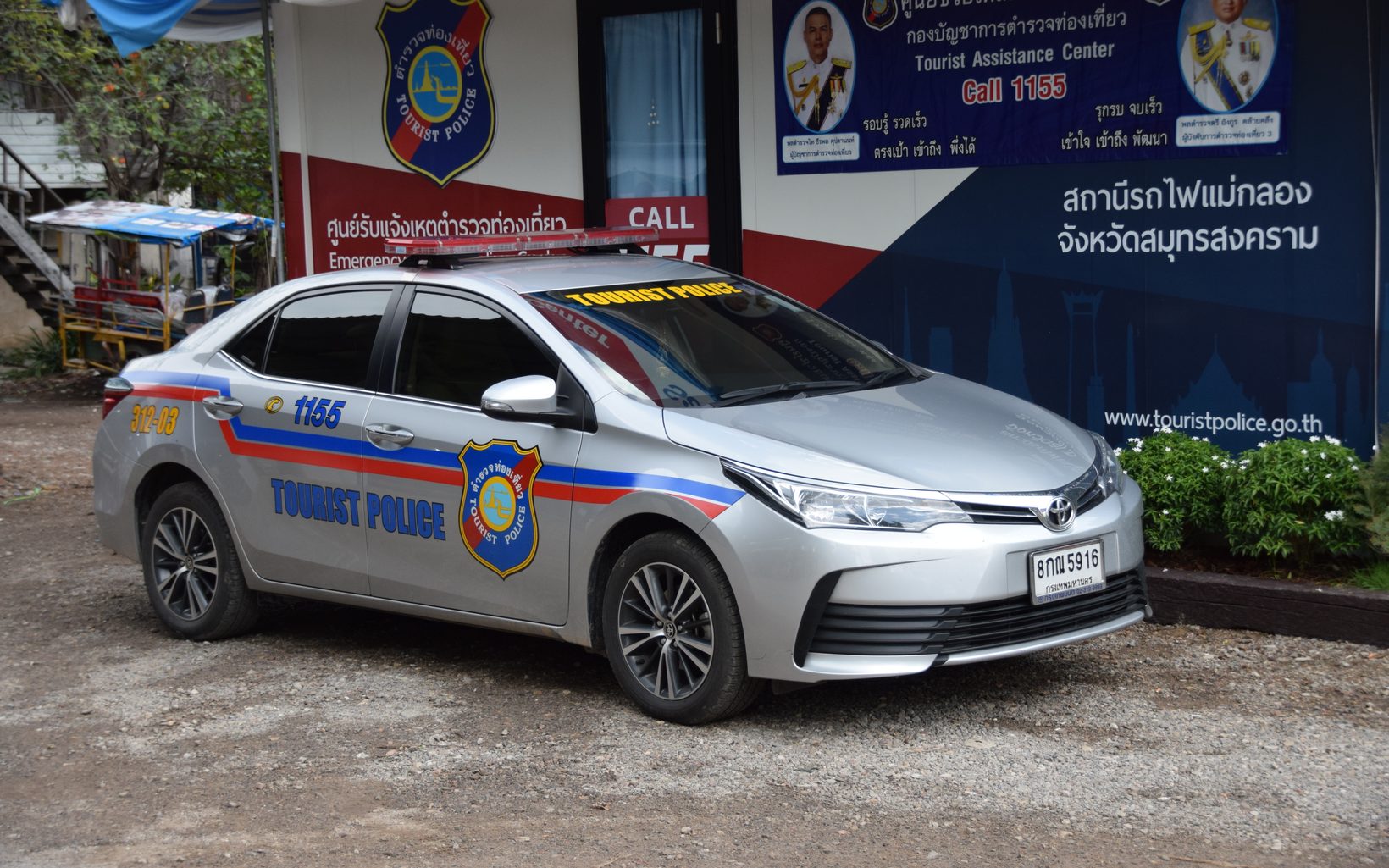
This guide sets out the scams that the Tourist Police, the Thai government and the travel advice of foreign governments actually warn about, and what each advises. Everything was checked on 19 September 2026.
Numbers to save before you land
| Who | Number | For |
|---|---|---|
| Tourist Police | 1155 | Help and complaints, 24 hours, in several languages |
| Police emergency | 191 | Emergencies |
| Medical emergency | 1669 | Medical emergencies |
| Tourism Authority of Thailand | 1672 | Information and help |
| Tourist Assistance Center | 0 2134 4077 | The Ministry of Tourism and Sports’ centre for tourists’ problems and complaints |
| Consumer Protection Board | 1166 | Shops, goods and services |
| Department of Land Transport | 1584 | Taxis, tuk-tuks, buses and minibuses |
| Cyber Police | 1441 | Fake websites, such as paid arrival-card sites |
| Anti-Trafficking in Persons Center | 1599 | Coercion and trafficking, 24 hours |
The Tourism Authority described the Thailand Tourist Police app in December 2024 as free on iOS, Android and Huawei, with an SOS button that connects to the 1155 call centre, live chat with interpreters in English, Chinese, Japanese, Korean and Russian, and a way to report incidents. The UK government says it is available to tourists who do not have a Thai SIM card.
Rental damage claims and passport deposits
Both the UK and Canadian governments warn about this. Canada’s advice says rental companies have at times accused renters of causing damage when the equipment was returned, and that some renters who refused to pay were harassed, threatened and had the passports they had left as collateral withheld. It adds that some companies stole the motorbike themselves and then claimed compensation.
The UK advises never handing over your passport as a guarantee, and Canada tells its citizens never to use their passport as collateral for a rental. For motorbikes and jet-skis, Canada also advises:
- reading the contract, and checking the vehicle is insured against damage and theft;
- photographing any existing damage as proof that it was already there;
- renting only from reputable companies.
Gem and jewellery sales pitches
Canada warns of merchants selling lower-quality gems and jewellery at inflated prices with a promise that they can be resold at a profit, and says merchants’ guarantees are not always honoured. It also says its government cannot help obtain refunds.
The Tourism Authority’s own gem-buying advice, from 2017 and the latest it has published that we found, warns against strangers posing as government representatives who promise a special one-day sale, says the same applies to taxi and tuk-tuk drivers making similar promises, and calls street touts’ gem deals “almost always a scam”. If you do buy, it advises getting a detailed written receipt recording the stone’s type, colour, weight, size, cut and quality.
Bar and nightclub bills
Canada warns that some bars, nightclubs and entertainment venues may try to charge exorbitant prices, and that arguments over the bill can lead to threats of violence. Its advice: confirm prices before you order, avoid running a tab, and do not leave your credit card with the staff.
Drink spiking
The UK government says drink spiking and drug-assisted sexual assault happen in tourist areas across Thailand, to men and women, and advises never leaving a drink unattended or accepting one from a stranger. Canada extends that to food, snacks, gum and cigarettes from new acquaintances, and advises getting medical help at once if you think you have been drugged. New Zealand’s advice names drink spiking among the petty crimes in tourist areas and on public transport. The UK also warns that methanol, which can kill in small amounts, cannot be detected in a drink by taste or smell.
Card fraud and cash machine skimming
The UK warns of card fraud and cash machine skimming, and Canada of credit card and ATM fraud. Their combined advice: keep your card in sight when someone else handles it, use cash machines inside banks or in well-lit public places, avoid card readers that look unusual, cover the keypad when you type your PIN, and check your statements. Our money guide covers what the machines charge.
Taxis and tuk-tuks
Canada advises using licensed taxis from official ranks, limousine services or a trusted ride-sharing app, and warns that unlicensed vehicles, with black and white number plates, are not properly insured to carry passengers and may not use a meter. It says disputes with taxi and tuk-tuk drivers have sometimes led to violence or intimidation, and that you should ask the police for help if you feel threatened. The UK advises care with belongings in open vehicles such as tuk-tuks, and names bag-snatching by motorbike riders as a risk.
Complaining about a driver. The Tourism Authority’s complaint centre sends taxi, tuk-tuk, motorcycle, bus and minibus complaints to the Department of Land Transport on 1584, which also takes complaints online. In February 2026 a news report said the department had launched “Taxi Dee Prom”, QR stickers in taxis that passengers scan with its DLT GPS NOTICE app to check the driver, estimate the fare and report refusals or overcharging. We could not find a Department of Land Transport page confirming the scheme.
Official taxi fares and airport pick-up points are in our taxi guide and our airports guide.
Fake booking pages on social media
In May 2026 the Government Public Relations Department warned about fake accommodation pages that copy a real resort’s photos, logo, reviews and posts. Its checks before you pay a deposit:
- Look at the page’s history, under Page Transparency. Fake pages are often new or recently renamed.
- Be wary of a large following with few likes or comments.
- Real properties link to an official website or their own booking system.
- A reputable property takes payment into a company or co-owner account.
- Find the property’s number yourself and call it, rather than using the one on the page.
If you have already paid, it says to phone your bank straight away so it can temporarily freeze the receiving account, and to report it to the Royal Thai Police at thaipoliceonline.go.th with your evidence. In May 2025, a news report said three suspects were arrested over fake Facebook pages posing as Pattaya hotels, and that the Tourist Police urged travellers to check a page really belongs to the hotel before transferring money.
Fake arrival-card and “fast track” sites
The digital arrival card is free and filed only at tdac.immigration.go.th. The government warned in October 2025 that sites charging for it are scams, and asked people to report them to the Cyber Police on 1441 or the 1212 online complaints centre, keeping the web address and screenshots. In January 2026 the government’s Anti-Fake News Center rated as false a claim that the Immigration Bureau had opened a new, paid registration site. Our guide to entering Thailand has the card’s rules.
The Immigration Bureau’s Division 2 warned in March 2024 about a Facebook page selling a paid “fast track” through immigration at Suvarnabhumi and Don Mueang, and said no airport immigration checkpoint offers such a service with any company.
Job offers and business invitations that end in forced work
The UK government warns about job offers that seem too good to be true, saying people have come to Thailand for promised high-paying jobs and been taken illegally to neighbouring countries. Canada reports a rise in foreigners lured this way and then forced to work for scam operations, and says to verify any job offer through official channels. In May 2026 the Tourism Authority reported on four Chinese nationals invited to Thailand on the pretext of business who were taken through Bangkok and Mae Sot into Myanmar and forced to work in a call-centre operation.
Calls and messages claiming to be officials
After a so-called virtual kidnapping case in May 2026, the Royal Thai Police, through the Tourism Authority, warned visitors to be wary of unsolicited calls or messages claiming to come from officials, especially any that involve threats, demands for money, or instructions to cut off contact with family or travel alone. Its advice is to pause, check directly with family or the authorities, and report it at once. The police’s Anti-Trafficking in Persons Center takes calls on 1599, 24 hours a day.
Unlicensed tour operators
In July 2026, after an unregistered operator selling a pilgrimage tour to Saudi Arabia was arrested at Suvarnabhumi, the Tourist Police advised anyone buying a tour abroad to check that the company is registered with the Department of Tourism before paying, and to call 1155 or use the Tourist Police app if in doubt. Canada likewise advises making sure a travel agency is reputable before paying.
If it happens: who does what
- Theft, assault or a threat: the Tourist Police on 1155, or 191 in an emergency.
- A shop, bar or product: the Office of the Consumer Protection Board on 1166, or complaint.ocpb.go.th. Its Fasttrack channel asks the business to resolve a complaint within 14 days of it being received.
- A tour company or guide: the Tourism Authority’s complaint centre refers these to the Department of Tourism.
- A taxi or tuk-tuk: the Department of Land Transport on 1584.
- A deposit paid to a fake page: your bank first, then thaipoliceonline.go.th.
- A fake arrival-card site: the Cyber Police on 1441, or the 1212 online complaints centre.
- General help: the Tourism Authority on 1672, or its complaint centre on +66 2 250 5500, Monday to Friday, 08:00 to 17:00, closed on official holidays.
What this guide leaves out, and why
Two stories you may come across online are the driver who tells you the Grand Palace is closed today and offers to take you somewhere else instead, and fake police issuing on-the-spot fines. We could not find either described on any official Thai or foreign-government page we were able to read, so we do not retell them as fact. The advice above, on drivers promising deals and on checking who you are dealing with, still applies.
What we checked, 19 September 2026
Every scam here is one an official source describes: the Tourist Police Bureau, the Tourism Authority of Thailand, the Government Public Relations Department, the Immigration Bureau, or the current travel advice of the UK, Canadian and New Zealand governments, which is labelled as such. The Office of the Consumer Protection Board is cited only as a complaint channel. Each was re-opened by a second reader and confirmed on the page. Stories that circulate online but that no official page we could read describes, such as drivers claiming the Grand Palace is closed or fake police issuing fines, are named as unconfirmed rather than retold. Australia's and the United States' advice pages timed out or refused access, so neither is quoted. No first-hand account is given.
Sources
- Tourist Police Bureau, Tourist Police Bureau
- About the Tourist Police, Tourist Police Bureau
- Unregistered tour operator arrested, 4 July 2026, Tourist Police Bureau
- Tourist Police: your first friend for safe travels, 11 November 2024, Tourism Authority of Thailand
- The Thailand Tourist Police app, 25 December 2024, Tourism Authority of Thailand
- Tourist assistance numbers, 25 November 2025, Government Public Relations Department
- Tourism crisis monitoring centre opens, 26 November 2025, Tourism Authority of Thailand
- Tourism complaint and suggestion centre, Tourism Authority of Thailand
- Complaints about transport, Tourism Authority of Thailand
- Complaints about products and services, Tourism Authority of Thailand
- Complaints about tour agencies, Tourism Authority of Thailand
- Complaints about robbery and assault, Tourism Authority of Thailand
- Online complaints, Office of the Consumer Protection Board
- Tourist Assistance Center, updated 29 November 2022, Royal Thai Embassy, Lima
- Buying gems and jewellery in Thailand: top tips, 9 June 2017, Tourism Authority of Thailand
- Taxi Dee Prom QR system (news report), 23 February 2026, Thairath
- Fake TDAC websites warning, 18 October 2025, Government Public Relations Department
- Beware of TDAC scam websites, 24 November 2025, Royal Thai Embassy, Canberra
- Fee-charging TDAC site rated false, 17 January 2026, Anti-Fake News Center Thailand
- Fake accommodation booking pages, 22 May 2026, Government Public Relations Department
- Arrests over fake hotel pages (news report), 21 May 2025, The Nation
- Fake immigration fast-track page warning, 28 March 2024, Immigration Division 2, Immigration Bureau
- Four Chinese nationals assisted, 29 May 2026, Tourism Authority of Thailand
- Visitor safety after a virtual kidnapping case, 5 June 2026, Tourism Authority of Thailand, relaying the Royal Thai Police
- Thailand travel advice: safety and security, UK Foreign, Commonwealth and Development Office
- Thailand travel advice: getting help, UK Foreign, Commonwealth and Development Office
- Travel advice and advisories: Thailand, updated 9 September 2026, Government of Canada
- Thailand travel advice, updated 4 September 2026, New Zealand Ministry of Foreign Affairs and Trade (SafeTravel)